Why Are Brewers Choosing Hem Brewing for Custom Solutions?
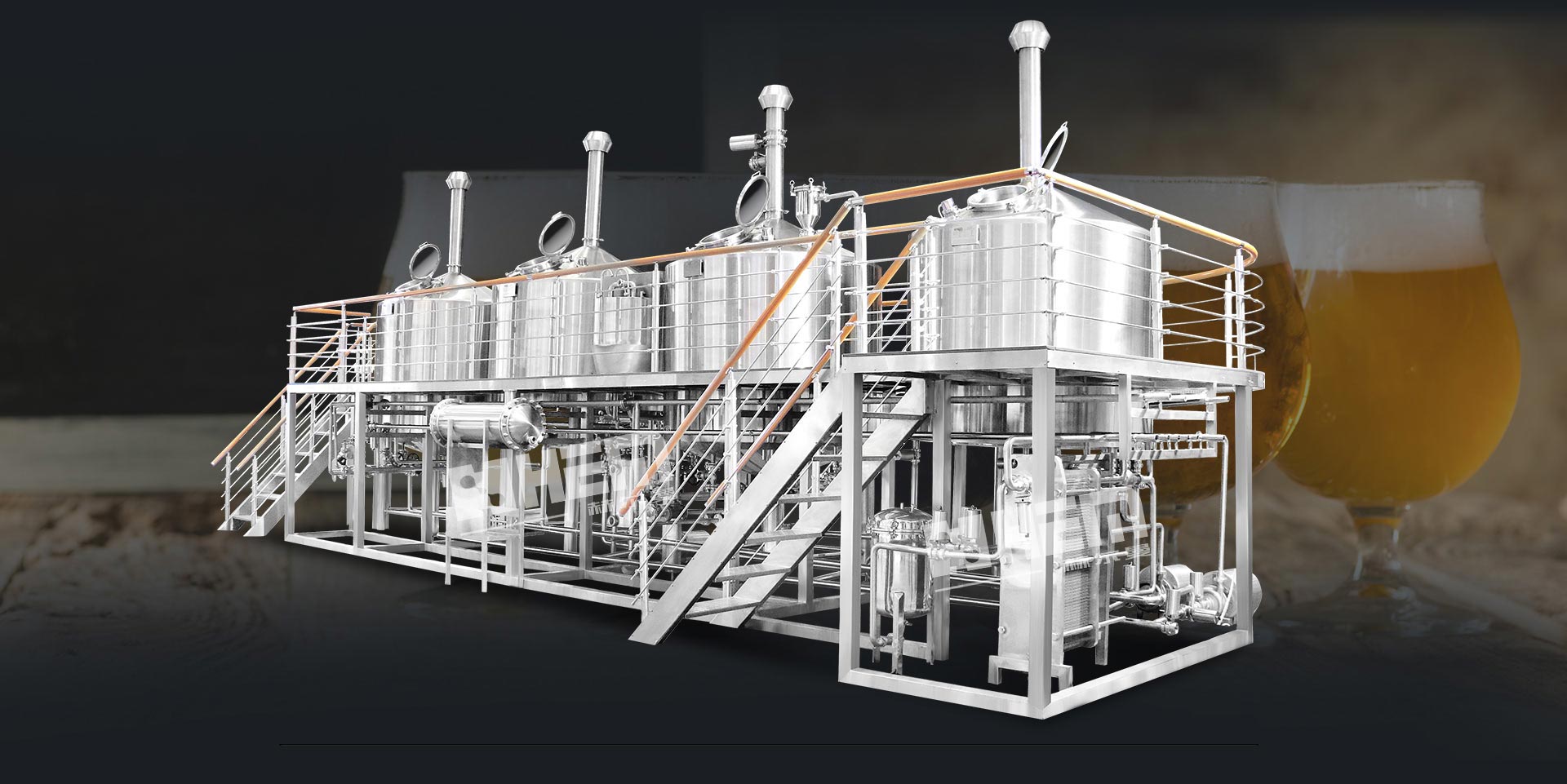
Brewers choose Hem Brewing when standard equipment does not fit their production volume, floor plan, beer range, utility supply, or planned expansion. That matters in a U.S. craft market where 9,796 craft breweries operated in 2024 and produced 23.1 million barrels, down 3.9% from 2023. A custom brewhouse can be specified around batch size, vessel geometry, heating method, cellar capacity, controls, piping, and cleaning rather than forcing the brewer to work around a fixed package. The practical test is not how many features a system has, but whether its capacity, utilities, sanitary design, and controls match the brewery’s daily production schedule.
Brewing equipment is being purchased in a more demanding market than it was several years ago. U.S. craft beer represented 13.3% of beer volume in 2024, while craft production fell to 23.1 million barrels. At the same time, craft retail sales reached about $28.8 billion, up 3% year over year. With 430 brewery openings and 529 closures reported for 2024, equipment purchases have to support realistic output rather than capacity that may sit unused.
That production environment explains why customization starts with sizing rather than appearance. A brewer planning 1,500 barrels per year has different needs from one targeting 15,000 barrels. The Brewers Association defines regional craft breweries as operations producing more than 15,000 barrels annually, while its statistics separately track microbreweries, brewpubs, and taproom breweries. A 10 BBL brewhouse running two turns produces 20 BBL before fermentation losses; changing to three turns raises theoretical daily brewhouse output by 50% without increasing nominal vessel size.
Capacity should therefore be discussed as barrels per brew, turns per day, brewing days per week, fermentation days, and annual sellable volume—not as brewhouse size alone.
Fermentation capacity makes that calculation more useful. If a 10 BBL brewery fills one 20 BBL fermenter with two brews and holds an ale for 14 days, cellar scheduling looks very different from a lager held for 28 days. Doubling residence time can roughly halve the number of annual tank cycles when every other operating condition stays unchanged. Hem Brewing can approach a custom project around brewhouse and cellar requirements together rather than treating fermenters as an unrelated purchase.
The same planning applies to vessel configuration. A two-vessel brewhouse can suit a brewery with moderate throughput, while operations running several turns may benefit from separating mash, lauter, kettle, and whirlpool functions. Separating processes allows one vessel to begin another stage while the previous batch moves forward. For a brewer expecting production to rise 30% over several years, connection points, controls, piping routes, and cellar space can be planned before another tank is installed.
| Design item | What the brewer should specify | Why it affects daily production |
|---|---|---|
| Brewhouse | 5, 10, 20 BBL or another batch size | Determines wort volume per turn |
| Fermenters | Quantity and working volume | Sets cellar capacity |
| Heating | Steam, electric or other configuration | Changes utility and installation requirements |
| Controls | Manual, semi-automatic or automated | Changes operator involvement |
| Layout | Vessel, piping and service locations | Affects transfers and cleaning |
| Expansion | Future tank and utility connections | Reduces later modification work |
Utility planning follows capacity planning because brewing is both thermal- and electricity-intensive. Brewers Association guidance gives an average electrical-use range of about 12–22 kWh per barrel and thermal use of roughly 1.3–1.5 therms per barrel across breweries of different sizes. Its energy manual also notes that smaller breweries commonly use more energy per barrel because fixed energy requirements are spread over fewer barrels.
A brewery producing 10,000 BBL per year at 18 kWh/BBL would use about 180,000 kWh of electricity under that simple benchmark. A reduction to 15 kWh/BBL would lower annual consumption by approximately 30,000 kWh, or 16.7%. Actual results depend on refrigeration, packaging, HVAC, process temperatures, operating hours, and local conditions, but the calculation shows why equipment selection needs utility data before fabrication begins.
Heating configuration deserves similar attention. Steam can serve breweries requiring repeated high thermal loads, while electric heating may fit smaller installations where boiler infrastructure is undesirable. Neither method is automatically better. A custom supplier should establish batch volume, heating time, available electrical service, steam pressure, local installation requirements, and expected brews per day before specifying the system.
Water adds another measurable operating requirement. Brewers Association resources describe water consumption and wastewater disposal as continuing economic and environmental issues for breweries, while its industry material notes that breweries without effective conservation programs can use more than 10 gallons of water for every gallon of beer produced. Cleaning and sanitation account for a substantial part of brewery water demand.
That makes tank geometry, spray devices, drains, valves, hose routing, and clean-in-place arrangements more than fabrication details. A 20% reduction in cleaning water across repeated tank washes can become substantial over hundreds of cleaning cycles. Custom hem beer equipment can be specified around the brewery’s vessel sizes, cleaning method, floor drainage, water pressure, chemical program, and available service space rather than adapting those requirements after installation.
A tank that fits the floor but leaves poor access to valves, manways, instrumentation, or cleaning connections can add unnecessary work every production week.
Sanitary fabrication also affects repeatability. Product-contact areas need smooth, cleanable surfaces, appropriate fittings, sanitary welds, and geometry that limits places where product or cleaning solution can remain. Stainless steel is widely used because it combines corrosion resistance, cleanability, mechanical strength, and fabrication practicality. The appropriate stainless grade, surface treatment, gasket material, valve type, and fitting standard should still be matched to the application rather than selected from a generic specification.
Pressure requirements require equal care. Fermenters, brite tanks, and other pressurized vessels have different operating conditions from atmospheric vessels. In the United States, applicable pressure-vessel requirements can involve ASME Boiler and Pressure Vessel Code provisions along with state and local requirements. ASME published its 2025 BPVC edition as the current generation of its long-established boiler and pressure-vessel standards. Equipment specifications should therefore identify design pressure, operating pressure, relief arrangements, and required certification before manufacturing starts.
Controls then connect the mechanical system to repeatable brewing. A small brewpub may prefer manual valves and straightforward temperature controls because its production schedule does not justify extensive automation. A larger brewery running multiple batches can require automated temperature control, pump sequencing, level monitoring, recipe steps, alarms, and recorded process data. Moving from two daily brews to four represents a 100% increase in turns, so operator workload and timing become increasingly important.
Automation should still be selected by task. Automating temperature regulation can reduce repeated manual adjustments; automating transfer sequences can improve process consistency; recording temperatures and times can help brewers compare batches. A brewery does not need every available control feature. It needs controls that match staffing, recipes, production frequency, maintenance skills, and the consequences of a missed process step.
Recipe range adds another layer. In 2024, the Brewers Association counted 3,936 U.S. taproom breweries, 3,552 brewpubs, 2,029 microbreweries, and 279 regional craft breweries. Many operate different production models, so equipment suited to a taproom releasing frequent small batches may not suit a regional brewery focused on longer packaging runs.
A brewer making heavily hopped ales may place more attention on hop additions, whirlpool performance, dry-hopping arrangements, and product transfer. A lager-focused brewery may place more emphasis on cooling capacity and longer cellar occupancy. A brewpub producing several rotating beers may prioritize flexibility and fast changeovers. Custom engineering is useful because vessel volumes, ports, agitation, controls, piping, and cellar configuration can be selected around the beer list instead of a generic brewery model.
Maintenance access belongs in the same discussion. Pumps, valves, instruments, heat exchangers, motors, and seals eventually require inspection or replacement. If a component cannot be reached without removing nearby piping, routine maintenance takes longer. Designing adequate service clearance during the 2026 planning stage can be far less disruptive than rebuilding piping after production has started.
-
Specify working volume separately from total vessel volume.
-
Record available electrical power, water pressure, drainage, gas, steam, and refrigeration capacity before equipment design.
-
Match fermenter quantity to average fermentation time rather than brewhouse size alone.
-
Confirm sanitary fittings, valve types, instrumentation, pressure ratings, and applicable certifications in writing.
-
Plan at least one realistic expansion stage instead of purchasing equipment solely around first-year output.
Expansion planning has become more relevant as brewery counts and production patterns change. U.S. craft brewery numbers rose from 4,803 in 2015 to 9,796 in 2024, while the Brewers Association reports 9,578 for 2025, a 2.9% year-over-year decline. Purchasing the largest possible system is therefore not a substitute for planning. Capacity should follow a brewery’s sales model, production schedule, cellar use, and credible growth range.
For example, a brewery expecting 25% growth does not necessarily need a brewhouse 25% larger. Adding fermenters may solve the constraint if the brewhouse has unused turns available; adding another brewhouse vessel may help if brewing time is the limiting step. Refrigeration, hot-water storage, steam generation, packaging speed, cold storage, and wastewater capacity can each become the first limit. A custom project should identify which part of the process reaches capacity first.
That approach also explains why supplier communication matters before drawings are approved. Brewers should provide target annual volume, beer styles, batch sizes, expected turns, fermentation schedules, packaging formats, building dimensions, door sizes, ceiling height, utility data, and future production targets. A 2-inch error in a service connection or an overlooked ceiling restriction can create installation work that has nothing to do with brewing performance.
The commercial setting reinforces the need for that level of preparation. Craft volume decreased 3.9% in 2024, while employment increased 3.0% to 197,112 people as hospitality-oriented brewery models continued to employ more staff. Equipment that reduces unnecessary handling, supports consistent batches, fits the building, and remains serviceable can matter more than simply adding nominal production capacity.
Brewers choosing Hem Brewing are therefore buying around measurable operating requirements: barrels per turn, tank residence time, kWh per barrel, water use, available utilities, pressure ratings, cleaning access, control level, and future cellar capacity. When those numbers are established before fabrication, custom equipment can be evaluated against production needs rather than a standard equipment catalog.